
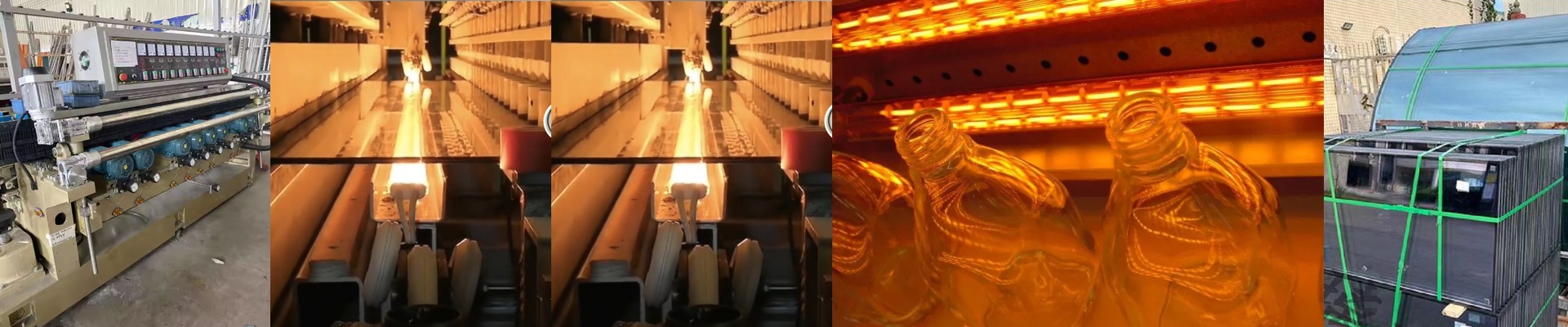


On the bending line, the clock starts the second the glass hits the furnace. If the thermal ramp is sluggish or uneven, you end up fighting two problems at once: optical distortion in the curve, and thermal stress that comes back to bite you later as breakage during tempering. We built the rapid heating modules to shorten that ramp and lock in the profile, so you can run thicker windshields and more complex shapes without blowing up the whole schedule. What really matters is control—while you’re still moving fast. The heating system uses short-wave quartz emitters tuned to glass emissivity, dumping energy straight into the glass with minimal convection. That gives you a tight, repeatable thermal field across the mold surface. Power is matched to the load—typically 1.5–3.0 kW per module—so you can scale from a prototyping press up to a full automotive line. The response is quick enough to hold setpoint within ±5°C during the critical soak, and the layout keeps hot spots off the edges—exactly where stress fractures tend to start. Here’s why it works on the floor: faster heating cuts cycle time without pushing you to higher peak temperatures. Less time at high heat means lower energy per part and fewer annealing headaches downstream. The same module can also handle stress relief runs before tempering, which lowers the risk of spontaneous breakage from trapped thermal gradients. In production, you get more consistent bend repeatability, fewer rejects from waviness, and a furnace that can keep up when the molding line is pushing hard. One practical heads-up: rapid heating forces you to get serious about thermal management at the interface. The module works with standard mounting and termination, but you need accurate temperature feedback from the glass or the mold zone—not just the chamber air. Plan your thermocouple placement carefully, and make sure the control strategy can handle the faster ramp without overshoot.