


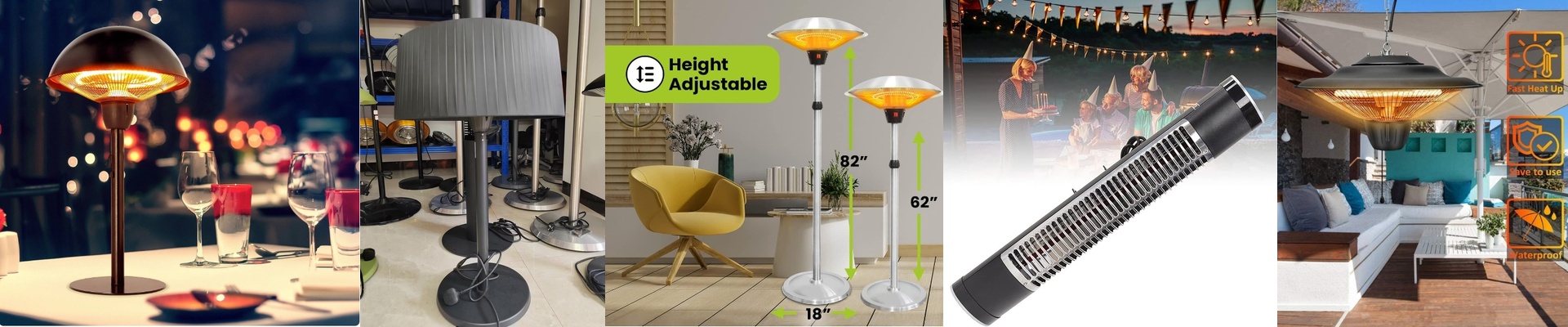

On the lamination line, the clock starts the moment you cut and heat the PVB film. If the preheat isn’t even, the knife grabs, the film stretches, and the layup drifts. Then the autoclave cycle makes you pay for it with bubbles, haze, and optical distortion. We built our heating module to stop that chain reaction right at the first link. What matters, technically We run short-wave infrared quartz emitters in a modular bank, tuned to the emissivity and thermal response of PVB. The system hits 3–5 kW/m², with response under 2 seconds, so the film surface gets to target fast and holds within ±3 °C across the active width. A focused elliptical reflector keeps the energy on the cutting zone, not on the frame. Control is PID, with the thermocouple right at the work surface—not tucked in the housing—so the reading is what the film actually feels. Why this works in the real lamination cell In glass lamination, you need repeatable heat without overshoot. This module gives you exactly that, so the knife cuts clean, the edge stays dimensionally stable, and the layup stays aligned. You end up with fewer rejects from optical defects and less rework from edge delamination. Energy use drops because the heat goes where it needs to go, and cycle times stay consistent even when ambient conditions shift. The unit drops in as a replacement for common OEM footprints, so you can upgrade without tearing up the line. What to keep an eye on The quartz emitters are sensitive to contamination—keep the lens clean and inspect seals weekly, especially in dusty or humid plants. Installation needs proper clearance to avoid shadowing at the cut edge, and reflector alignment should be checked after any lamp swap. You’ll see a slightly higher initial power draw during warm-up, but the steady-state profile settles quickly. Keep a spare lamp kit and an alignment fixture on hand so throughput doesn’t get strung out.